Where the Heat Goes When a Room Cools
Where the heat goes when a room cools explains why an air conditioner moves warmth outdoors, helping you understand the system’s parts and limits.
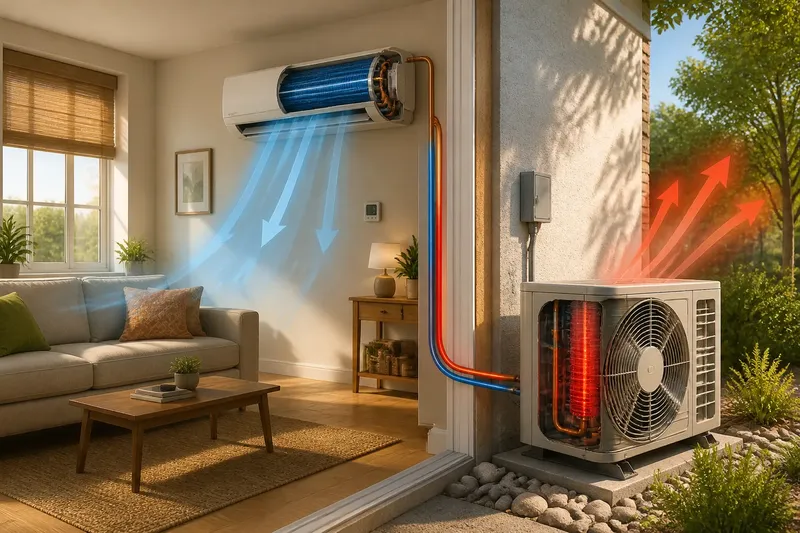
Where the heat goes when a room cools is easier to understand if you follow the warmth rather than the cool air. An air conditioner does not make heat disappear: it takes heat from indoor air and transfers it to another place, usually outdoors. That movement explains what the system’s main parts do and why a room can warm up again after cooling stops.
1. Heat leaves the room through the indoor coil
Room air passes over a cold surface called the evaporator coil. Heat moves from the warmer air into the coil, while a fan sends the now-cooler air back into the room. The air has lost some heat; it has not been replaced by a separate substance called “cold”.
Inside the coil, refrigerant absorbs that heat and changes state from liquid to gas. Refrigerant is a fluid that circulates through sealed tubing, carrying heat between the indoor and outdoor parts of the system. The coil is therefore a transfer point, not a place where heat is destroyed.
This distinction helps explain why air from a vent can feel cool without every surface in the room cooling at once. Furniture, walls and objects may still hold warmth, which can pass back into the air over time.
2. The refrigerant carries heat outdoors
The compressor raises the pressure of the refrigerant gas, making it hot enough to release its absorbed heat at the outdoor coil. A fan moves outside air across that coil. Heat then passes from the refrigerant into the outdoor air, and the refrigerant cools and condenses back into liquid.
Valves and tubing guide the refrigerant around the circuit. At the indoor side, a metering device lowers its pressure so it can absorb heat again. The cycle continues while the system is operating.
The outdoor unit is not simply “making cold” for the indoor unit. It is where the system disposes of the heat collected inside, along with heat added by the compressor’s work. That is why the air leaving an operating outdoor unit feels warm.
3. Heat can return through walls, sunlight and activity
Cooling a room does not stop heat from entering it. Sunlight passing through a window warms floors and furnishings. Heat can also move through walls, ceilings and glazing from warmer spaces, while people, cooking and appliances add warmth indoors.
These gains continue to challenge the cooling system. If they arrive faster than the system can carry heat away, the room may remain warmer than the thermostat setting. Curtains or blinds can limit direct sun, and switching off an unused heat-producing appliance can reduce one source of load.
Say you have a sunny sitting room with a warm patch of floor beside the window. Closing the blind during the strongest sun would be expected to reduce that direct warming; the air conditioner would still need to move heat already stored in the floor and furnishings.
4. Moisture leaves by a separate route
When humid air meets the cold indoor coil, some water vapour condenses into liquid droplets. The condensate drains away through a pipe or tray, taking water out of the room. This is a different process from transferring heat outdoors, though both happen at the indoor coil.
Removing moisture can make a room feel less clammy, even if the air temperature changes only modestly. The system must also handle the heat involved in condensing water vapour, so humidity affects the work the cooling equipment has to do.
Water draining from an air conditioner is not refrigerant. If you notice persistent indoor leakage or an unusual change in the unit’s operation, consult the manufacturer’s guidance or a qualified HVAC professional rather than opening sealed components.
5. The room’s surfaces affect how cooling feels
People exchange heat with the air and with surrounding surfaces. A sun-warmed wall or window can make someone feel hot even when the air is cooler, because the body still exchanges radiant heat with that surface. Conversely, a cool surface can make a room feel more comfortable without a large change in air temperature.
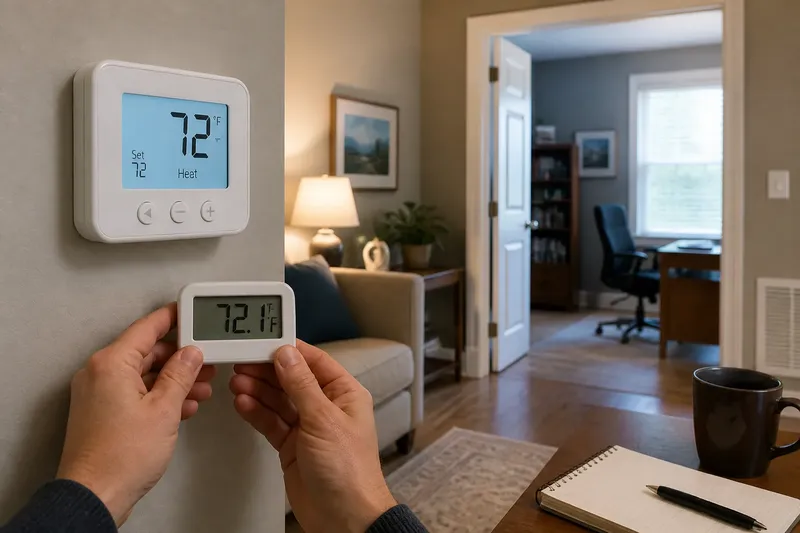
This is why a thermostat reading alone cannot describe every part of comfort. Air movement, humidity, clothing and nearby surfaces matter too. A fan can make skin feel cooler by helping heat and moisture leave its surface, but it does not remove heat from the room in the way an air conditioner does.
6. What happens to the heat after the system stops?
Once cooling stops, heat continues to move from warmer places towards cooler ones. Warm outdoor air may pass through the building envelope, and stored warmth in surfaces can return to the room air. The indoor temperature can therefore rise even though the air conditioner previously cooled it.
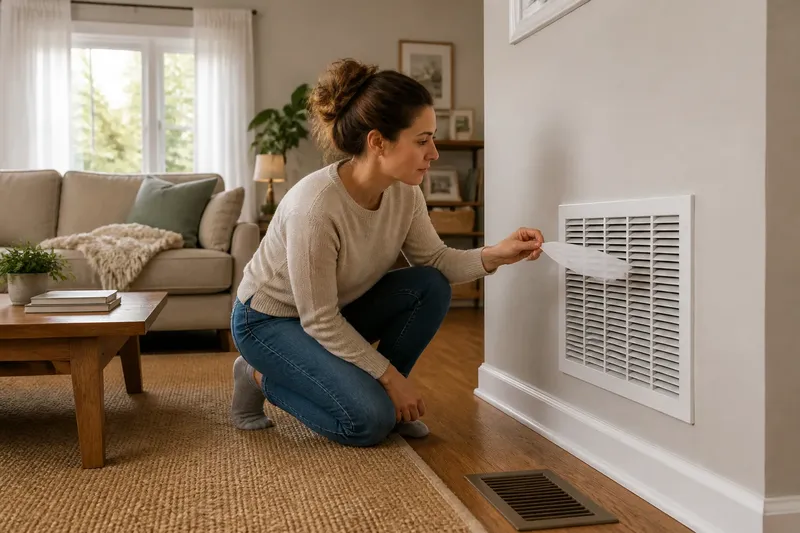
The equipment also needs suitable airflow and clear outdoor access to transfer heat effectively. Keep grilles and the outdoor unit’s air path free of obvious obstructions, but leave maintenance and internal repairs to a qualified professional. For refrigerant handling or electrical work, follow the product instructions and use an appropriately qualified technician.
Where the heat goes when a room cools: what should you know?
Does an air conditioner bring in cold air from outside?
Most conventional split systems cool indoor air by circulating it across the indoor coil; they do not rely on drawing outdoor air into the room. Ventilation, where fitted, is a separate function and depends on the system design.
Why does the outdoor unit release warm air?
It releases heat collected from indoors, plus heat associated with running the compressor. The outdoor coil and fan help transfer that warmth into the surrounding air.
Does a fan cool a room?
A fan can improve comfort by moving air across the skin, but it does not carry heat out of the room. It is most useful when people are present and can feel the airflow.
Why can a room feel warm after cooling stops?
Heat may still enter through windows and building materials, while warm surfaces release stored heat back into the air. The room’s temperature reflects these ongoing exchanges, not just the last moment the system ran.
When you ask where the heat goes when a room cools, trace its route: from indoor air to the evaporator coil, through refrigerant, and out through the outdoor coil. That simple picture also clarifies the system’s limit: cooling changes where heat is, while sunlight, surfaces and daily activity keep adding more.