From Coal Grate to Central Heating: How Indoor Comfort Changed
Coal grate to central heating shows how pipes and ducts carried warmth beyond the hearth, changing how buildings could be heated and rooms used.
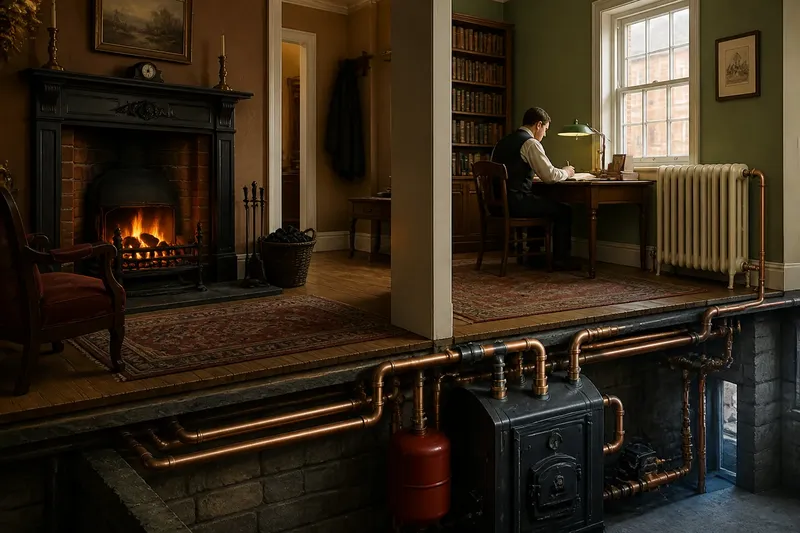
The shift from coal grate to central heating changed how heat travelled through a building. A grate warmed the room around it; pipes or ducts could carry heat from a separate source to other rooms. That difference reshaped household routines and expectations without making every space equally warm.
A coal grate tied warmth to one room
A coal grate gave off radiant heat, which people could feel directly when they sat nearby. It also warmed the air around it. Smoke and much of the hot air left through the chimney, so warmth was strongest close to the fire and less dependable elsewhere.
Household tasks followed that arrangement. Someone had to tend the fire, add fuel and deal with ash. People could close doors to retain warmth, move chairs nearer the grate, or use clothing and blankets when the heat did not reach them. The fire was also visible, making its presence and changing intensity easy to notice.
In a home with several rooms, the grate did not supply heat evenly. A kitchen fire might support cooking as well as warmth, while a bedroom away from the fire could remain cold. The building’s layout and daily routines shaped which rooms were comfortable and when.
Central heating separated the heat source from the rooms
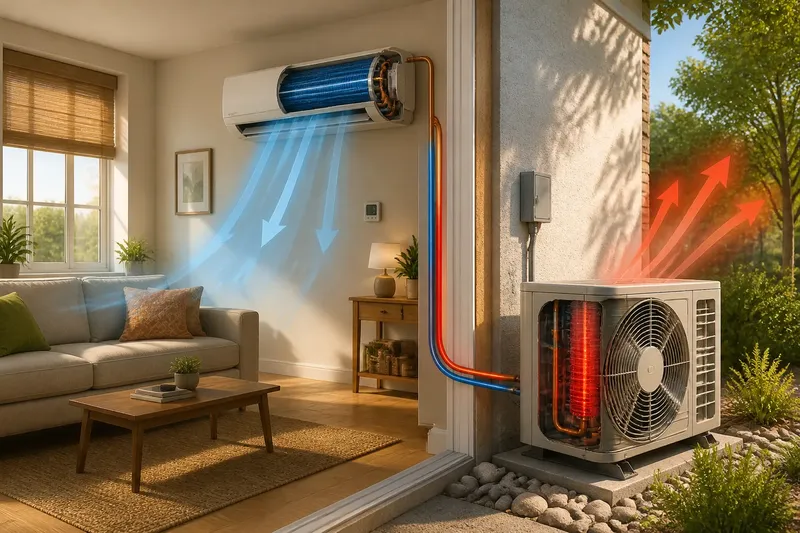
Central heating produces heat at one location and distributes it elsewhere in the building. In a hot-water system, a boiler heats water that travels through pipes to radiators. In a warm-air system, heated air moves through ducts to outlets. Both arrangements carry heat away from its source, but they use different equipment and routes.
This made the building part of the heating system. Pipes and ducts carried heat; radiators and air outlets delivered it to occupied rooms. A central source did not need to sit in the room where people wanted warmth.
Distribution did not make rooms identical. Their position, windows, doors and connection to the system still affected how they felt. The change was that warmth could reach beyond the room containing the fire, making more areas usable without moving the main heat source.
Heating changed which rooms people could use
When heat could be distributed, a bedroom, hallway or workroom could be considered separately from the room where fuel burned. Different spaces could be used for different purposes, rather than everyone gathering near a single fire. This did not require every room to be heated in the same way or at the same time.
Imagine a household whose front room has a coal grate, while an adjoining study stays too cold for comfortable work. In this invented situation, a later hot-water system supplies a radiator in the study. The household can then use the study without moving the fire or carrying a portable heater; the observable change is that work can take place there while the heat source remains in the front room.
Once heat reached several rooms, differences between them could become more noticeable. A colder room was no longer simply a place beyond the fire’s reach; it might be seen as a space the distribution system could serve. Yet the system’s layout and the building itself still limited how evenly heat travelled.
What changed besides the location of the fire?
Did central heating make every room equally warm?
No. Pipes or ducts could carry heat to rooms away from the source, but building layout, room use and system design still influenced the result. Distribution widened where heat could be delivered; it did not remove every difference.
What is the difference between a radiator and a boiler?
A boiler heats water in a hot-water system, while a radiator receives that water and releases heat into a room. They are connected parts with different jobs: one produces heat for the water, and the other delivers it locally.
Why did hearths remain in use after central systems appeared?
Heating practices changed gradually, and a hearth could still serve for cooking, warmth or gathering. Buildings adopted new systems under different circumstances, while older arrangements continued alongside them.
Does central heating always use radiators?
No. Hot-water radiators are one form of central heating; warm-air systems distribute heated air through ducts. The equipment installed in a particular building determines which method it uses.
Central heating made distribution the central question
The move from coal grate to central heating was not simply a change of appliance. It shifted the heating problem from keeping one fire going to carrying heat through a building. Pipes and ducts made rooms beyond the hearth reachable, while the building’s layout continued to shape where warmth could be felt.
That distinction remains useful when describing how heating works: a heat source creates warmth, and a distribution system carries it to other spaces. What is not worth the effort is treating every historical household or building as though it followed one uniform path; fuels, equipment and building arrangements varied.
When explaining a heating system, trace the route from its heat source to the room where heat is delivered. That simple distinction captures the change from coal grate to central heating without confusing the place that produces warmth with the parts that carry it.